Making a complex product family plannable and usable with the ERCO Invia configurator

With the modular Invia trunking system, configuration goes beyond form. It is not only about the layout, but also about what happens within it. Profiles, lighting, performance and accessories interact and influence one another.

This is exactly where the Invia configurator comes in. It translates this multidimensionality into a structured and transparent process. The result is a concrete and reliable configuration from a wide range of possibilities – visually comprehensible, technically consistent, and directly applicable for planning and implementation.

Client
ERCO Leuchten GmbH
Year
2021 - 2022
Klickmeister
Florian Bräunsbach

Florian Bräunsbach

(Development & data structures)

Carlos Bystron

Carlos Bystron

(Development & interaction)

Initial situation and objectives

The Invia Configurator was developed as part of the launch of this new, modular product family by lighting manufacturer ERCO. Unlike traditional track lighting systems, it is not only the support structures that are relevant here; the integrated luminaires themselves are also part of the system’s logic. Profiles and lighting modules form a functional unit that can be flexibly combined, though their configuration is significantly more complex.

In addition to the geometric arrangement, different light distributions, modular inserts and technical parameters such as power consumption must be taken into account. As a result, the complexity shifts from pure structural planning to an integrated system configuration in which multiple layers interact simultaneously.

The objective was to develop a tool that makes this complexity accessible without reducing it. Users should be able to configure both the structure and the functional properties of a system independently. At the same time, it had to be ensured that the resulting configurations are technically valid and can serve as a reliable basis for planning, coordination and implementation.

Functional approach

The Invia configurator builds on the principle of the ERCO Track Configurator, but extends it with an additional level of interaction. While the focus there is primarily on the structure, here each individual unit within that structure can be configured. Users begin by defining a spatial layout. This structure forms the framework within which the actual detailing takes place. Each profile can then be viewed and edited individually. Within these profiles, defined areas are available where different luminaire modules can be inserted.

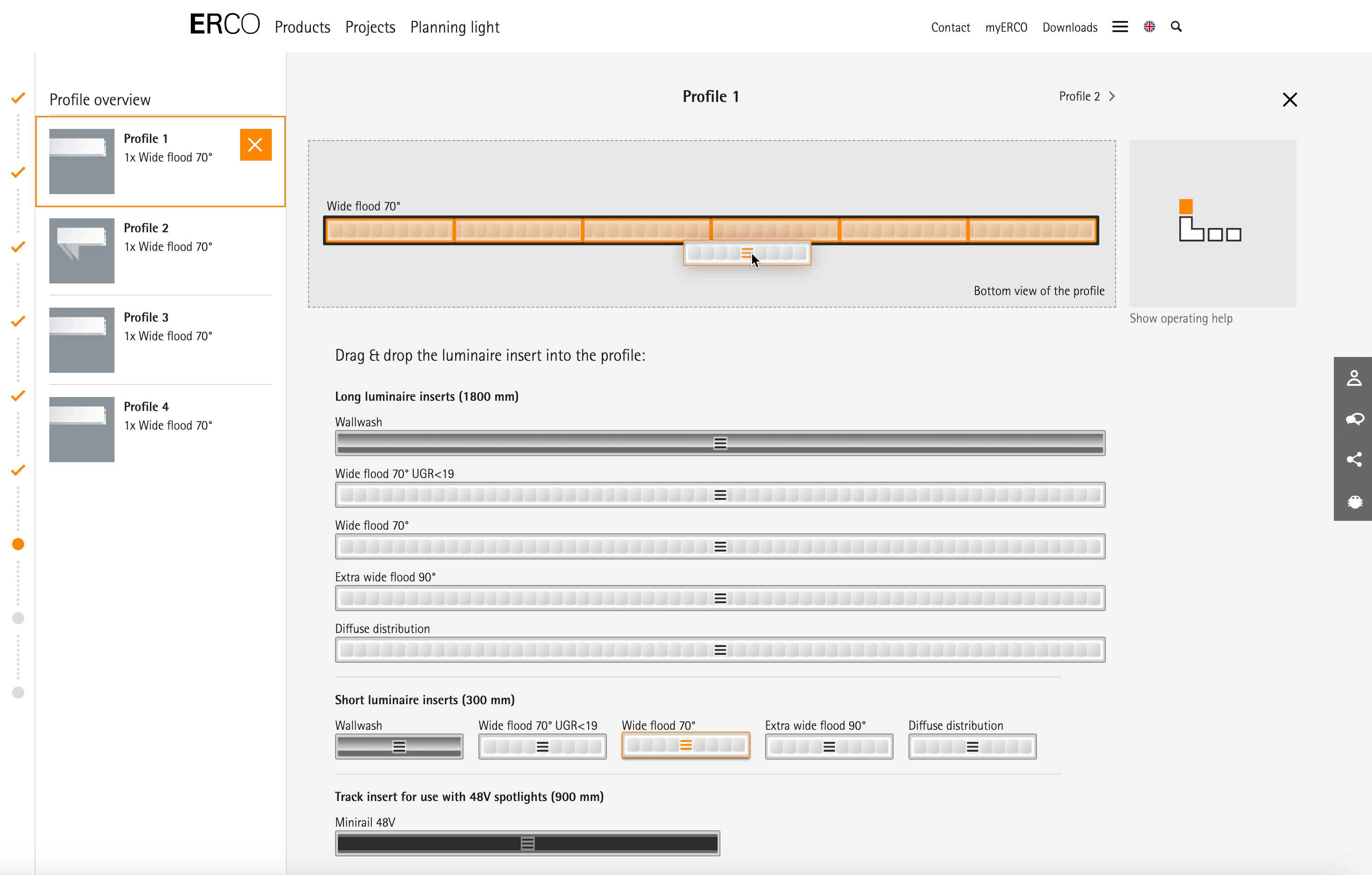
Interaction is handled visually via drag-and-drop. Luminaires are not selected abstractly, but placed directly into the structure. This creates a direct link between selection and spatial effect. Different module types, lengths and light distributions can be combined, resulting in a high level of variability that remains controlled.

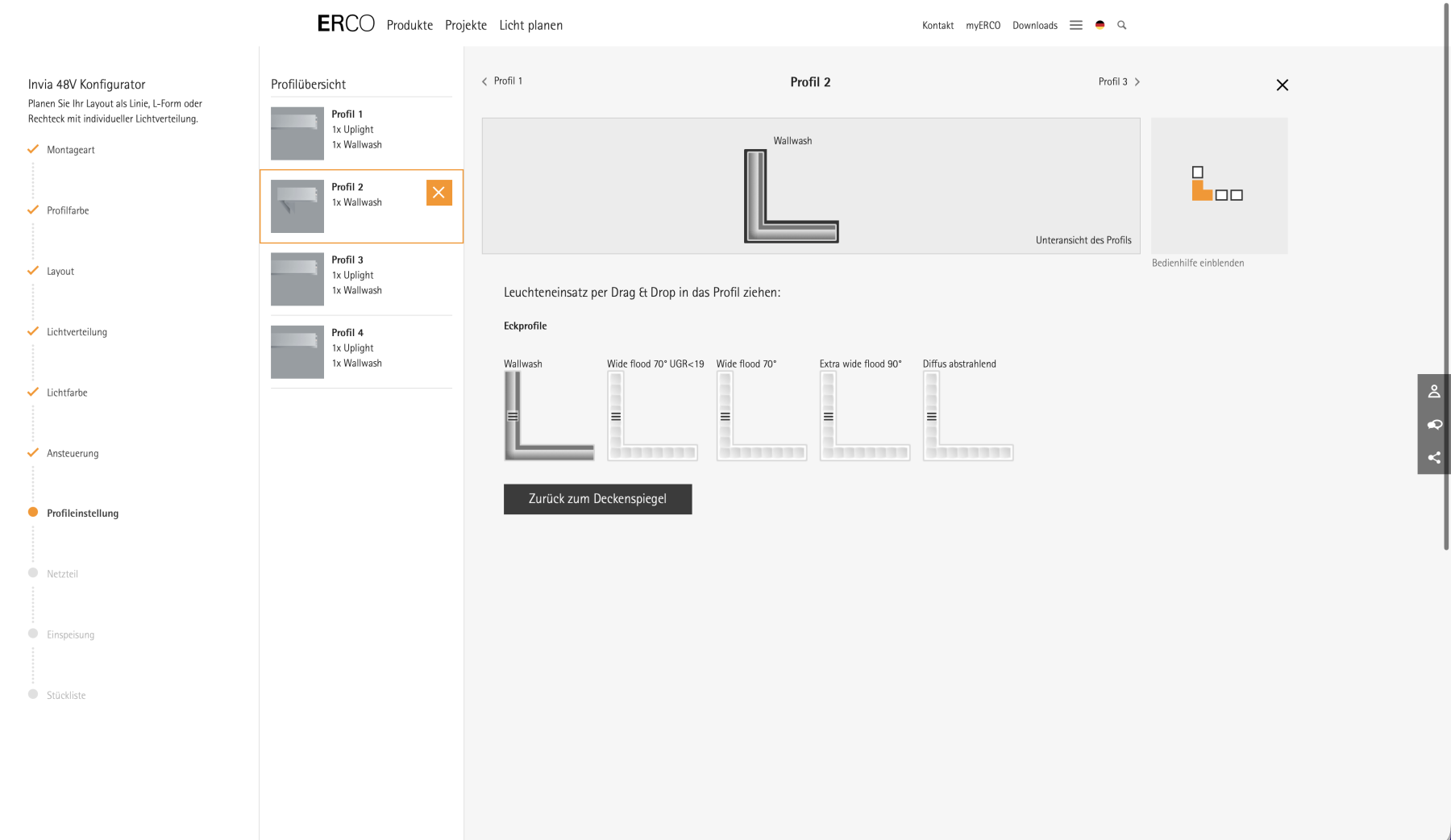
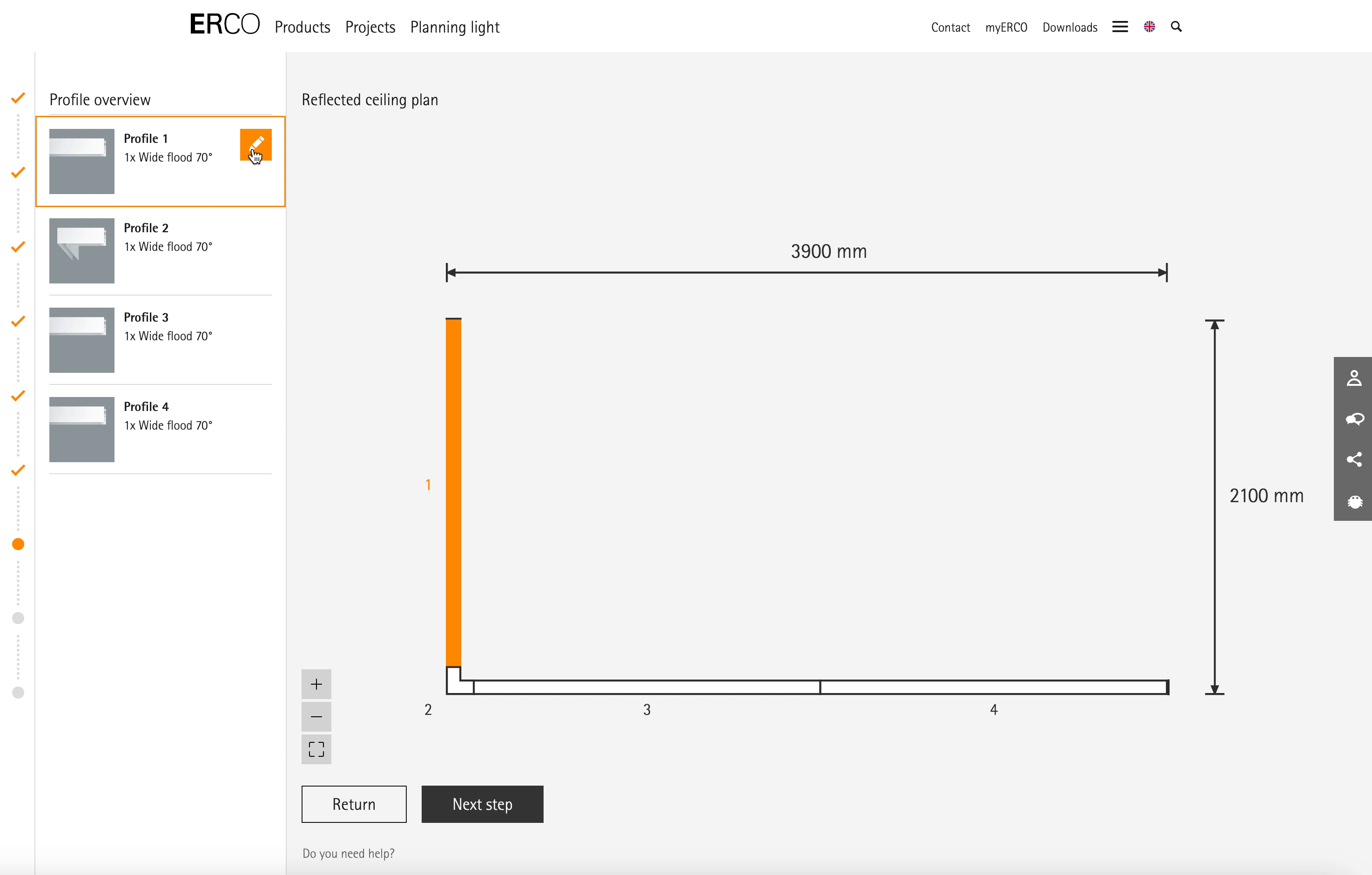
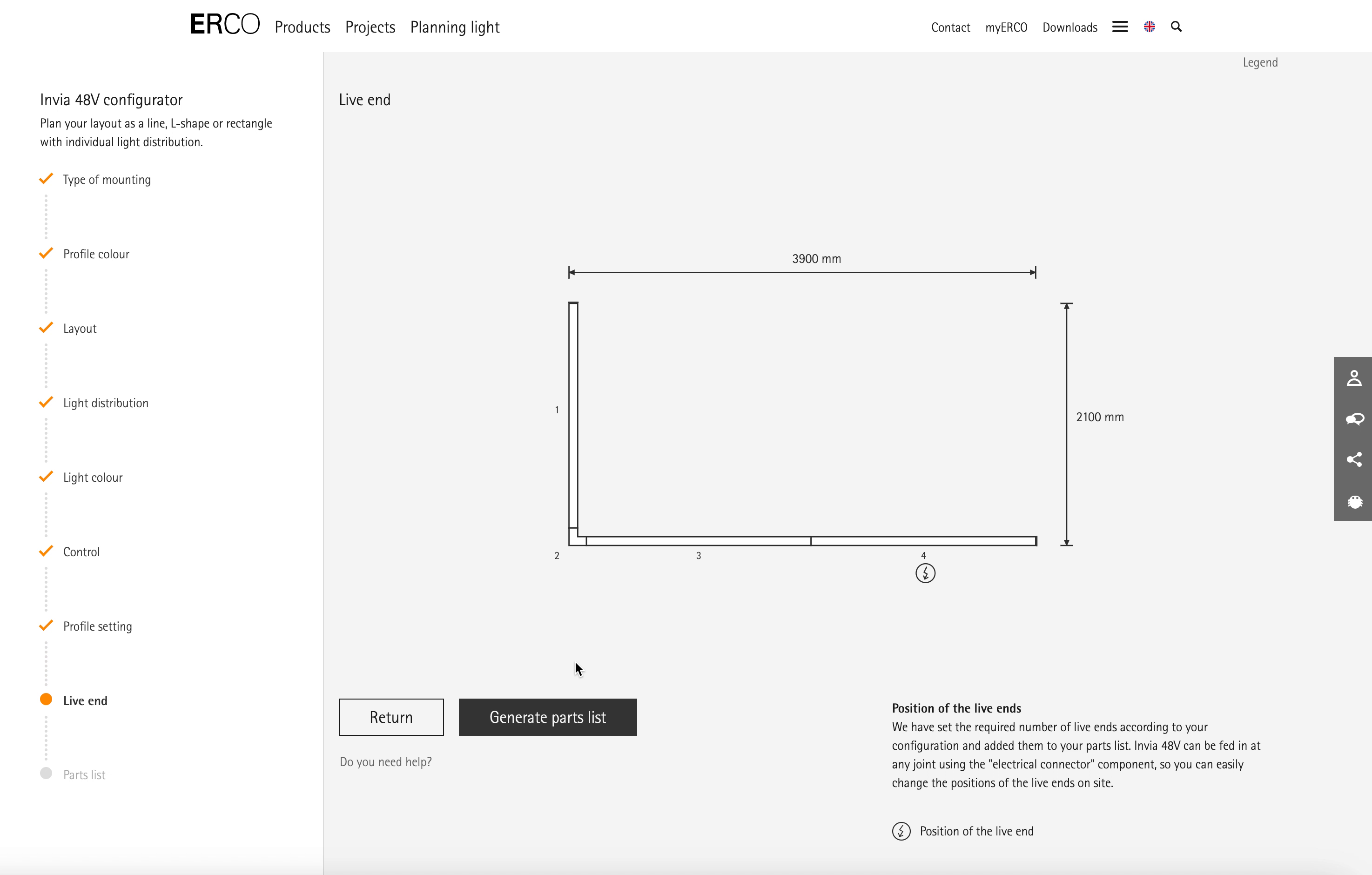
The application provides two perspectives. An overall view displays the complete structure, including its dimensions and layout. In addition, a detailed view allows editing of individual profiles, where the specific configuration with luminaires is visible and can be adjusted.

In the detailed view of the Invia configurator, each profile is edited individually. Luminaire modules can be selected with precise positioning, visually verified, and correctly assigned within the system logic.

Result presentation

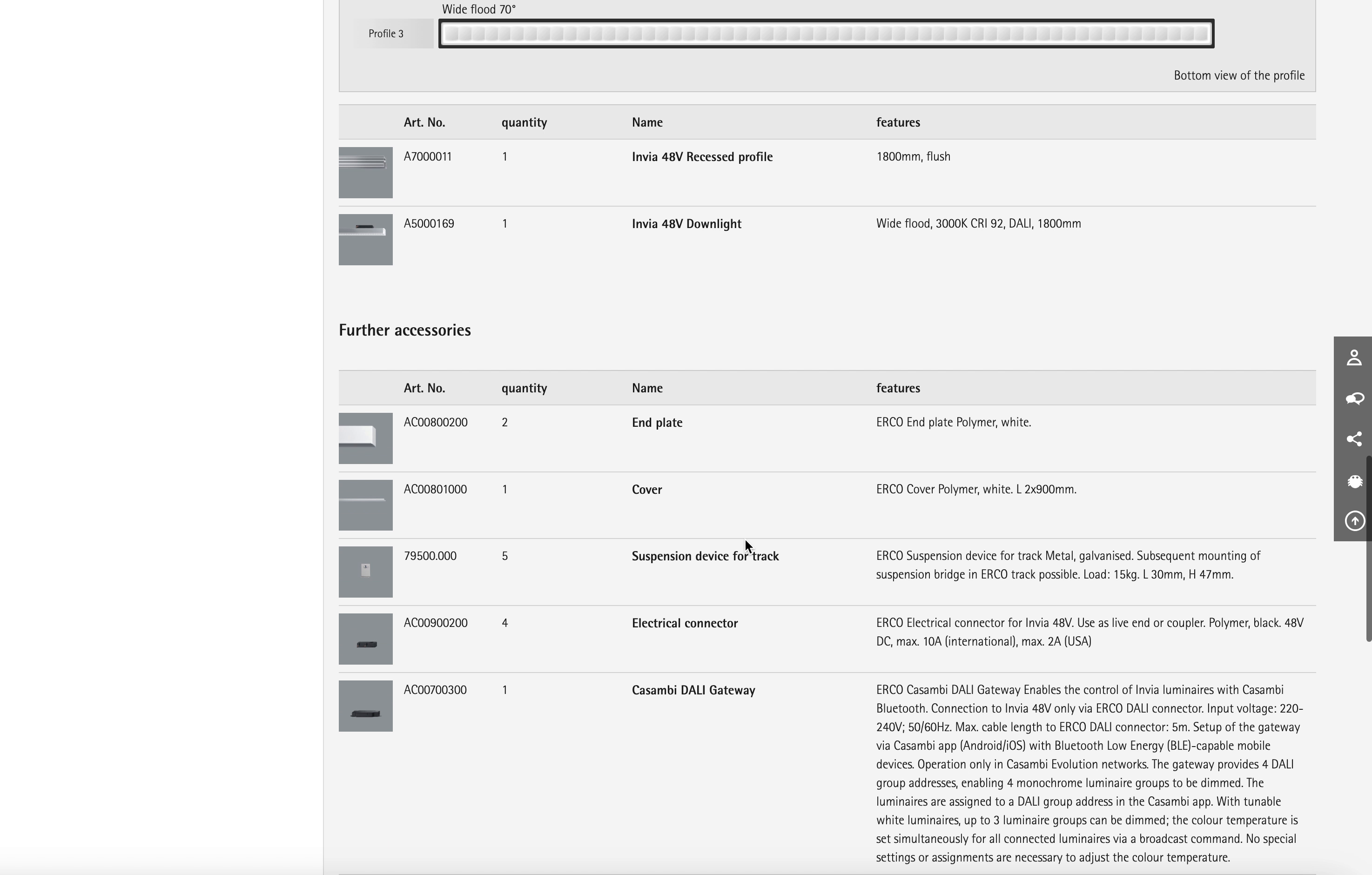
At the end of the configuration process, a detailed result presentation is generated that is relevant both for ordering and implementation. The application creates a complete list of all required components and presents them in a coherent structure. At the same time, the configuration is prepared in a way that remains understandable from an installation perspective.

In addition to the overall view, the configuration is broken down by profile. This makes it clear which components are used in each section of the structure. This allocation particularly facilitates on-site implementation, as the abstract planning is translated into concrete installation steps. The visual representation remains an integral part of the result. The structure continues to be displayed, preserving the relationship between planning and the actual installation situation. In addition, the entire configuration can be exported as a PDF, making all relevant information available in a compact format.

Accessories are intentionally not assigned entirely to individual profiles, but are instead presented in an aggregated form. This decision reduces the complexity of the presentation and follows the logic that certain components result from the overall structure and do not need to be considered separately for each segment.

Technical implementation

The technical implementation of the Invia Configurator is based on a combination of existing product data and project-specific extensions. Basic information is retrieved from existing data sources, while additional details required for the configuration are added and processed within a dedicated structure.

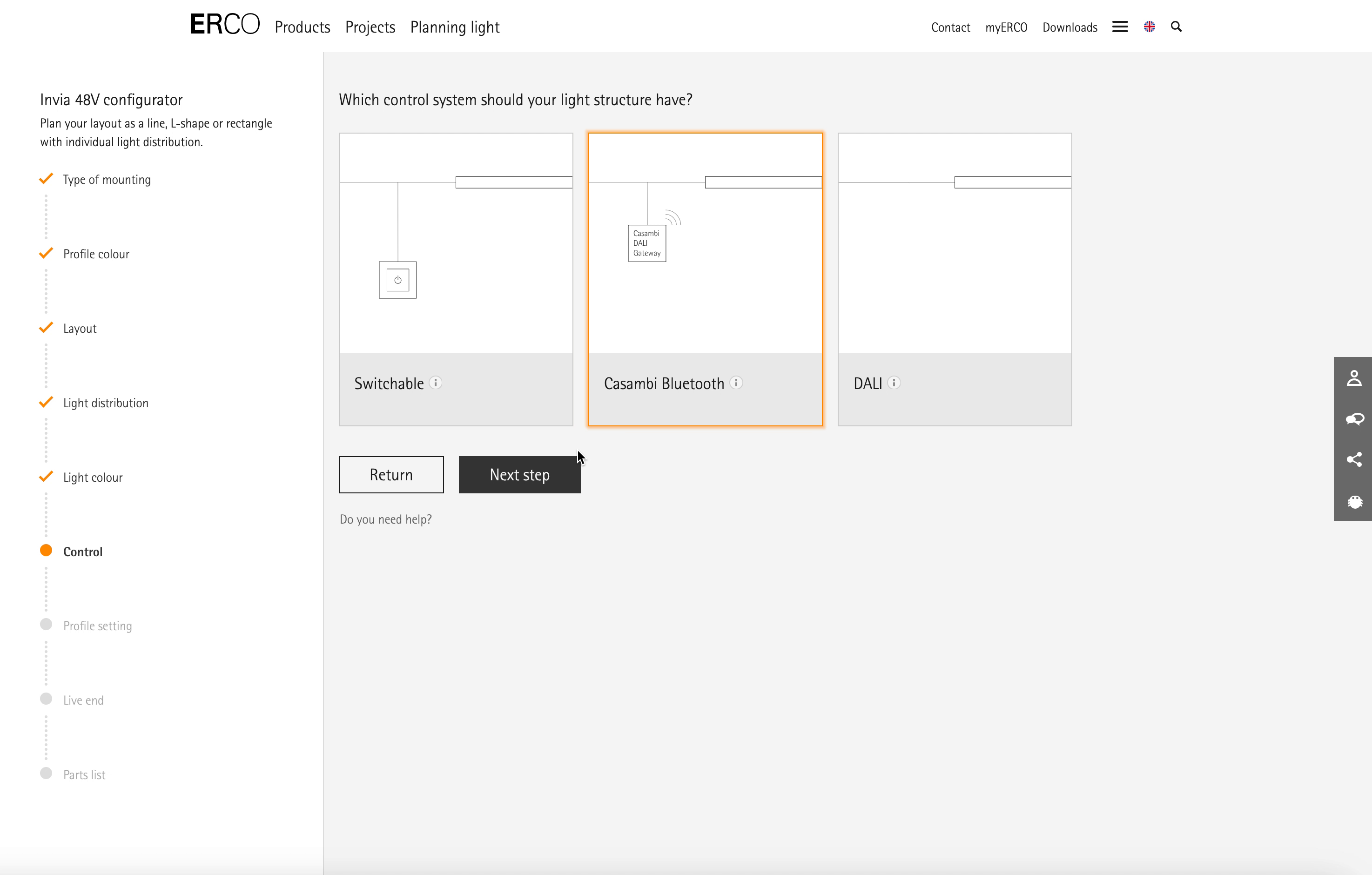
As with the ERCO Track Configurator, user guidance is controlled via a JSON-based structure. This defines the individual steps as well as the available configuration options. In contrast to the trunking configurator, however, a larger share of the actual logic is handled in the backend. Complex relationships that cannot be represented purely declaratively are processed there. This includes, in particular, calculations related to power consumption and the resulting dimensioning of power supplies. Special cases and specific dependencies between components are also handled at this level. The required system parameters are determined dynamically at runtime, ensuring that each configuration is evaluated individually.

The architecture therefore combines a flexible, data-driven control of the interface with deeper functional processing in the backend. This makes it possible to represent the high level of system complexity without unnecessarily complicating the user interaction.

Challenges during the project process

The development of the configurator was significantly influenced by the high complexity of the possible combinations. Unlike simpler configuration systems, this process generates many variants, each of which must be technically tested and validated. This variety significantly increases both development effort and quality assurance requirements. A key challenge was modelling the interdependencies between components accurately. The selection of specific luminaires has a direct impact on other system parameters, such as the required power supply. These relationships must be handled consistently to ensure valid results.

Additional challenges arose in the user interface, particularly with regard to drag-and-drop interaction. It had to be not only intuitive, but also stable and precisely aligned with the underlying logic. At the same time, the integration of different data sources required careful coordination of data structures to avoid inconsistencies.

Maintenance and further development

Compared to the trunking configurator, the maintenance effort for the Invia configurator is higher. This is primarily because parts of the business logic are not controlled solely via configuration data, but are implemented as backend functions. Changes to central components can therefore require adjustments in multiple areas of the system. The close integration of data and logic increases the complexity of updates, but at the same time enables a precise representation of more demanding product logics. As a result, the system remains capable of reliably mapping and further developing the high variability of the product family.

Application example

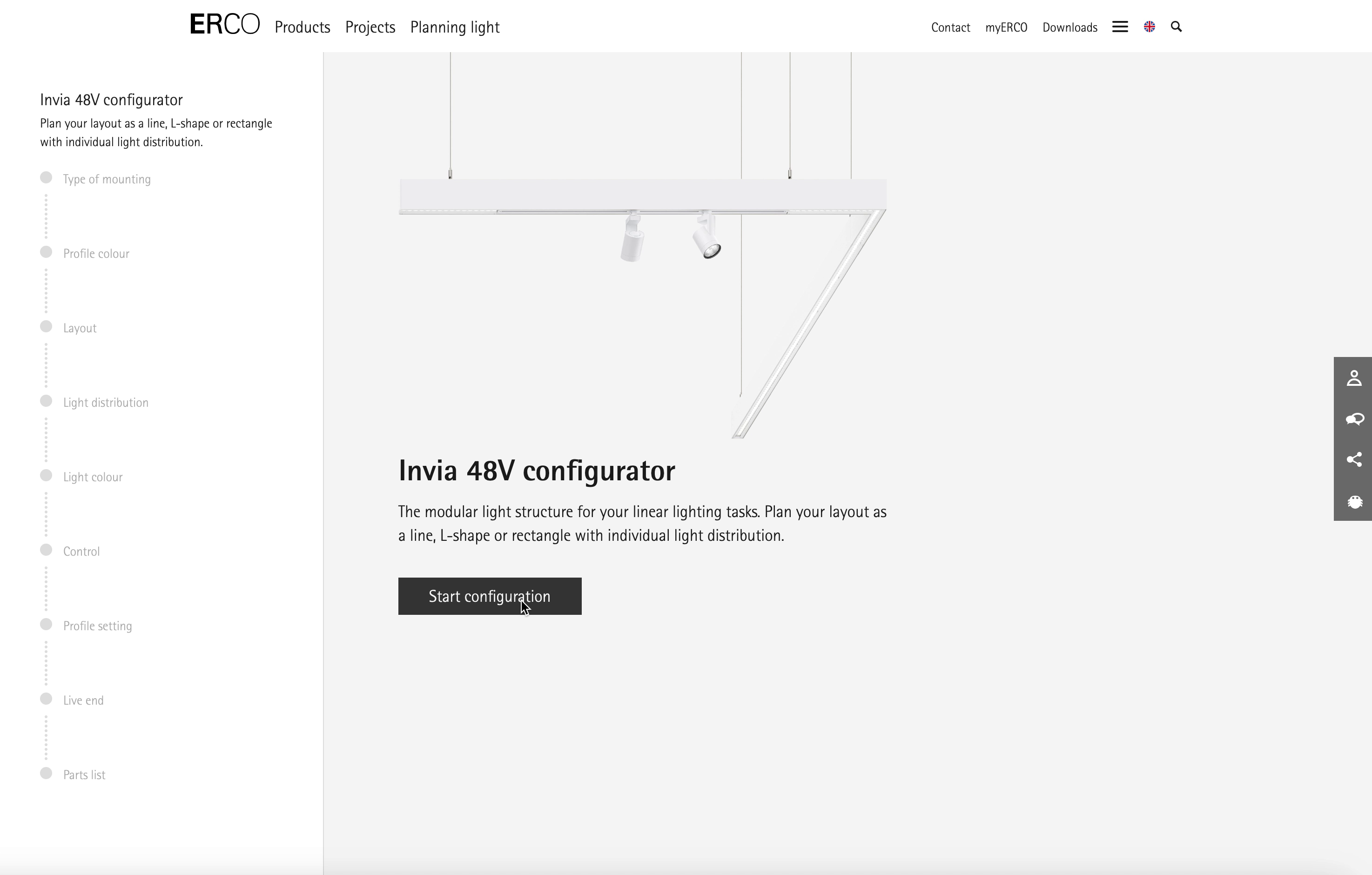
Here you can try the Invia configurator or view a sample configuration.

Insights into the project