From UX concept to finished design

  • Analysis
  • UX/UI
  • Prototyping

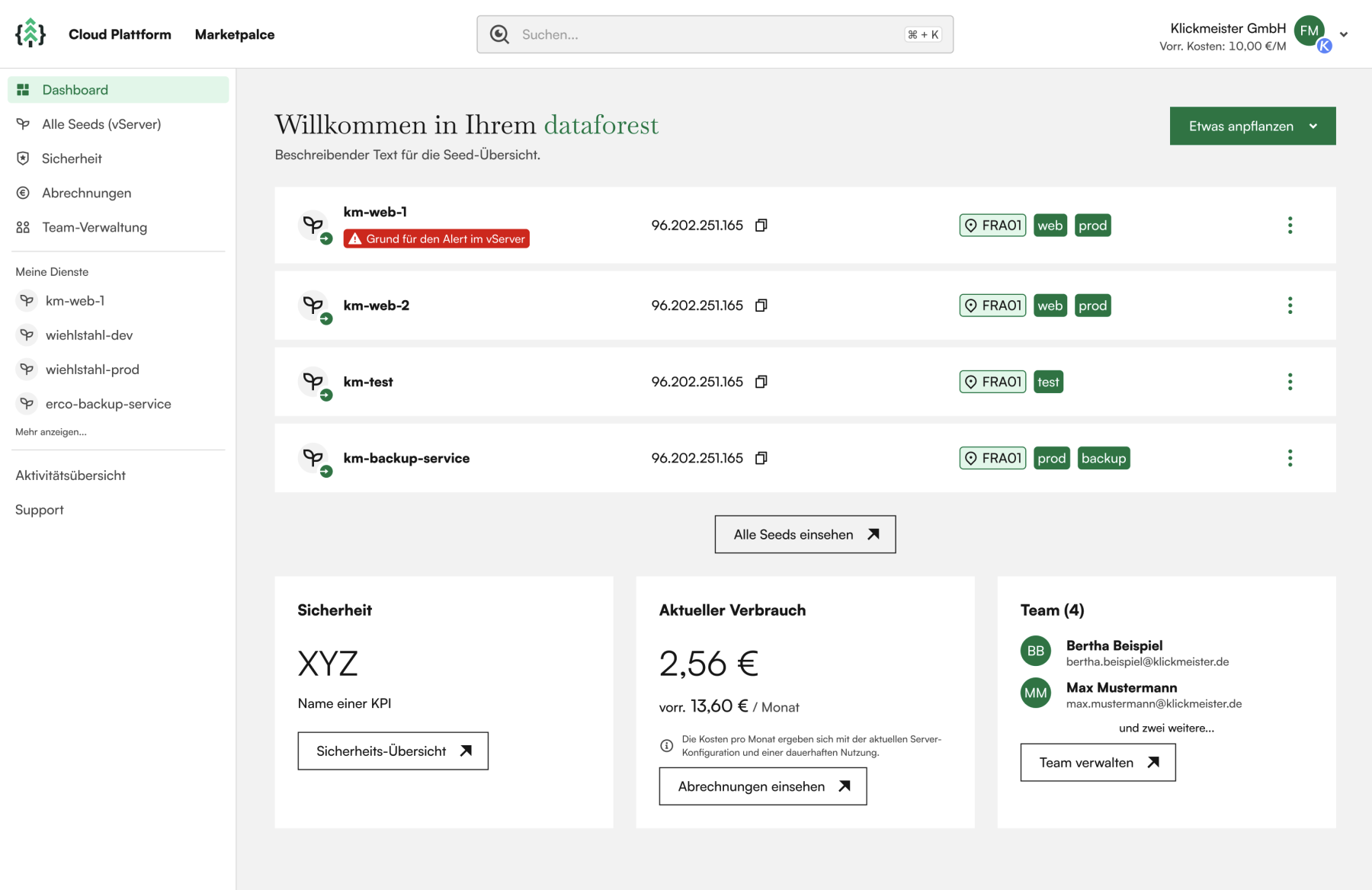
Together with dataforest, we have designed a self-service hosting solution that enables users to manage their own servers – in a straightforward, secure and scalable way. Through collaborative dialogue, we developed a UX concept for dataforest cloud, based on a modular design system that guides users step-by-step through the entire set-up process. Within two and a half months, we laid the foundations for a sustainable and continuously expandable application.

Client
dataforest
Year
since 2025
Tools
Figma
Klickmeister
Finn Maybauer

Finn Maybauer

Carlos Bystron

Carlos Bystron

Starting point: A strong technical vision combined with UX expertise

dataforest approached us with a well-thought-out technical concept and was specifically looking for a partner to take charge of the UX and UI design for a new self-service solution. The challenge was to design a platform that would function without the need for individual assistance from a support team and enable users to provision servers easily, securely and independently. The vision and architecture were already in place; our task was to develop a user journey based on these that would allow users to experience this technological strength first-hand, whilst ensuring both high usability and scalability.

Project objectives: Focus on independence and security

The key requirements for the new solution were a fully self-managed onboarding process, intuitive server management and a financially viable pricing model. For users of the self-service hosting platform from dataforest, the onboarding process was to be accessible, without any early requests for payment details, and with clear guidance on resource requirements. Particular attention was paid to security: as a German company specialising in defending against DDoS attacks, Dataforest clearly stands out from international providers in this respect. This strength was to be specifically highlighted at various points along the user journey during the design process.

Collaboration: Close coordination between design and domain expertise

Our role focused exclusively on designing the software interface and user flow, whilst the technical development was handled in-house by dataforest. Through close and regular consultation, we combined our UX and UI expertise with the dataforest team’s in-depth domain knowledge. The collaboration also benefited from our own practical background in DevOps, which helped us to understand user requirements with particular precision and to design solutions in a practical manner. This collaborative dialogue had a decisive influence on the project and led to a very dynamic, constructive way of working.

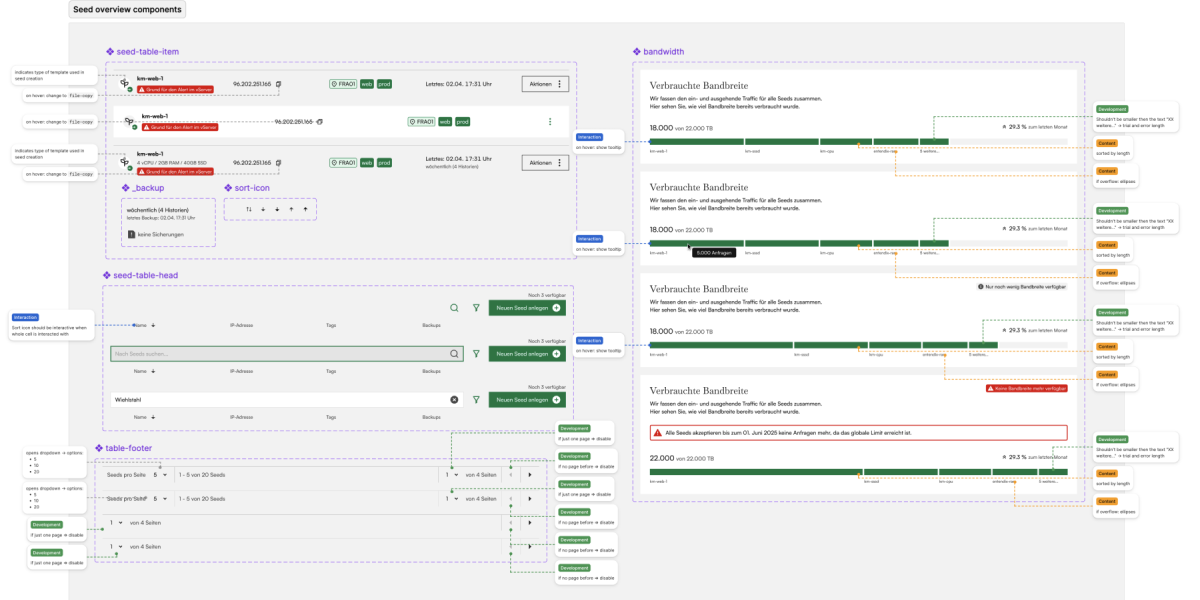
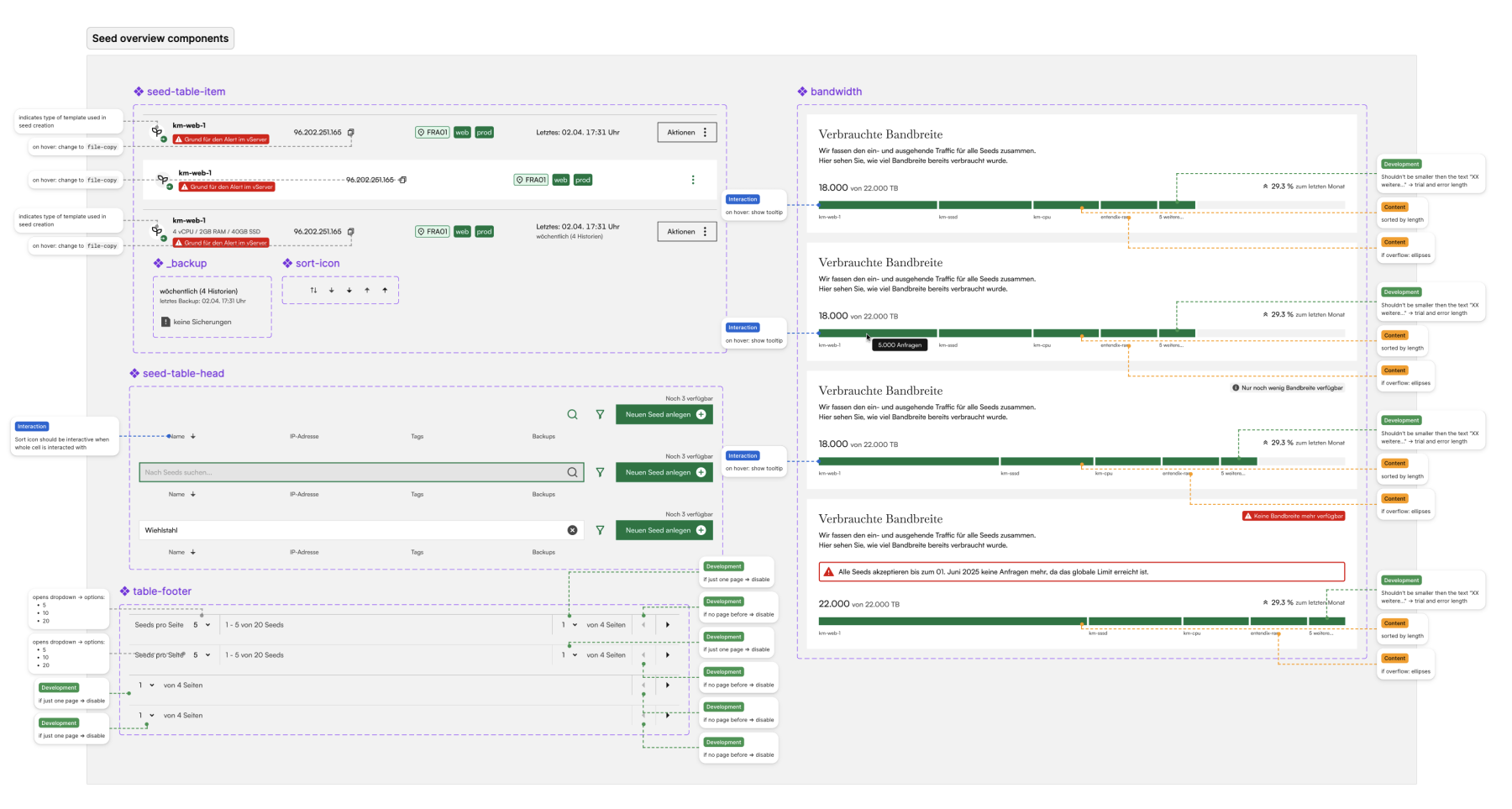
Neben den final gestalteten Screens wurden auch kommentierte Komponenten in allen verfügbaren Zuständen übergeben – beispielsweise bei Fehlermeldungen oder wenn eine Komponente aktiv ausgewählt ist.

Methodology: Concept phase using human-centred design

The project began with a structured “conceptual design” phase, during which we jointly analysed usage objectives, business requirements and security aspects and translated these into a navigation and content model. We documented this information on a digital whiteboard, which served as a shared frame of reference for all those involved. On this basis, we developed a modular design system that enables a fully responsive design and includes both a dark and a light mode. The design utilised defined variables and components to ensure a seamless and efficient handover to the technical implementation phase.

Challenges and Further Development: Striking a Balance between Vision and MVP

The biggest challenge was combining dataforest’s ambitious overall vision with the need for a focused MVP. During the course of our intensive collaboration, numerous new ideas and enhancements emerged; however, these were systematically collected in a well-maintained backlog and prioritised for later project phases. Thanks to an agile approach and weekly stand-up meetings, we succeeded in bringing the design to market-ready status in just around ten weeks, whilst at the same time laying the foundations for the long-term further development of the dataforest cloud.

Insights into the project